"The fence and wall regulations contained herein are written with a decidedly minimalist approach; to maintain a minimally obstructed and open feel to the natural character and topography of the City."
That sentence opens Ordinance 2026-05, which the City of Oak Hill adopted on second reading on August 19, 2026. It replaced a 2013 rule that let fences and walls up to six feet stand in any yard. Under the new code, whether a front fence is allowed depends on the lot's zoning district. A fence that already exists stays legal only as long as nobody changes it. So when you buy in Oak Hill, the fence comes with the house and can't really be redesigned, and a fence you planned to add may not be allowed on that lot at all.
The fence you inherit can be repaired, not redesigned
The clause most likely to affect a sale is section (e). Walls, fences, gatehouses, entry monuments and gates that existed when the ordinance was adopted "may continue to exist as constructed." They can be repaired or replaced, but only if the work doesn't change "the height, width, design, location, or color" of the structure. Repairs and replacements also have to use the same materials as the original.
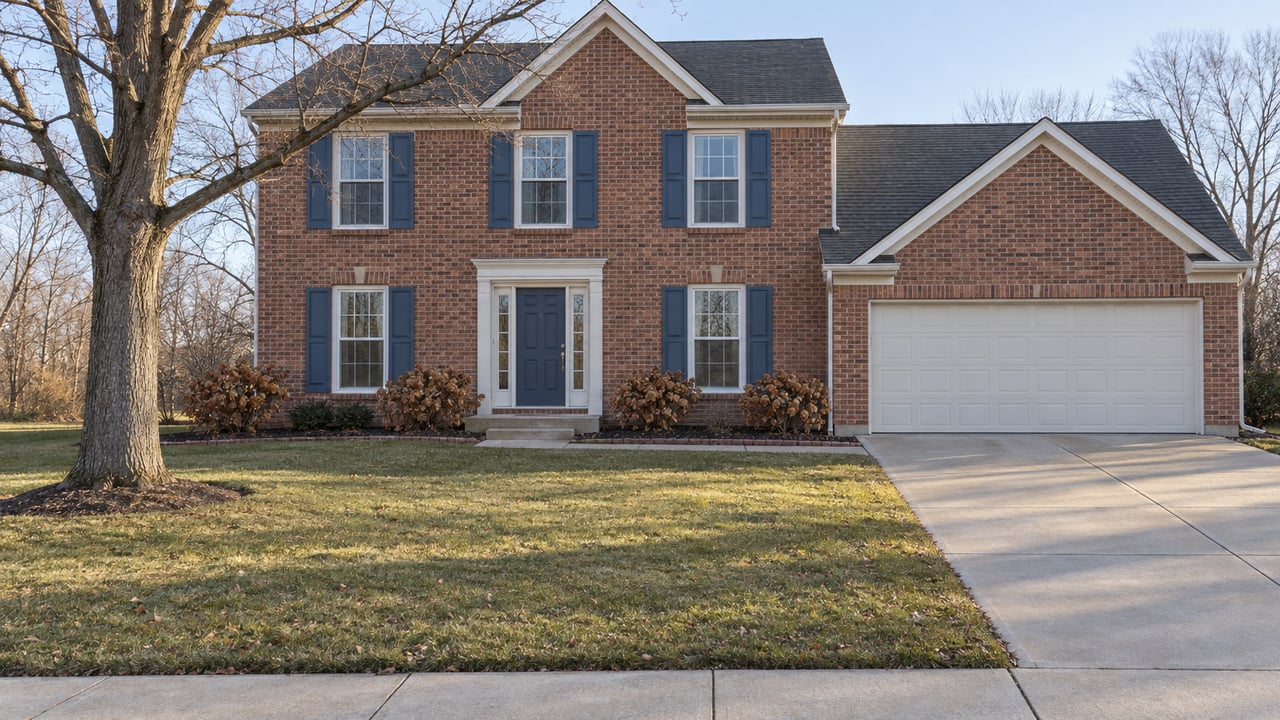
Under the 2013 rule, a six-foot fence was allowed in a front yard. Today that same front fence is prohibited in three of the city's six districts. If a house comes with one, the protection covers like-for-like work. Rebuilding a storm-damaged section with matching boards fits that description. A new color, a lower profile, a different picket style or a shift along the property line falls outside the language of section (e).
The rule also turns the fence's history into a fact that matters in a transaction. Protection depends on the fence having existed when the ordinance was adopted, so a fence built after August 19, 2026, has to meet the new rules on its own.
The lot's district decides what you can add
Oak Hill has six residential districts, A through F, defined mostly by minimum lot size. The new rules split them in half.
| District | Minimum lot area | Primary-structure front setback | Front-yard fence |
|---|---|---|---|
| A | 10,000 SF | 60 feet | Not permitted |
| B | 20,000 SF | 60 feet | Not permitted |
| C | 1 acre | 75 feet | Not permitted |
| D | 2 acres | 75 feet | Up to 4 feet |
| E | 3 acres | 100 feet | Up to 4 feet |
| F | 4 acres | 150 feet | Up to 4 feet |
The front setbacks show how much ground is involved. On a District A lot, the house sits at least 60 feet back from the front line, and under the new code none of that front yard can be fenced. The owner of a four-acre District F parcel can run a four-foot fence across a front yard at least 150 feet deep. The owner of a one-acre District C lot can't put up any front fence.
To find a property's district, the city posts its official zoning map, labeled as the 2025 amendment. Oak Hill's zoning standards page has the full table of lot and setback requirements and links to Metro's Parcel Viewer for looking up a specific parcel.
Back yards allow more, but screening has limits
The rear yard is where every district allows more. A rear-yard fence can be up to six feet tall, and that includes the side run from the back corners of the house to the side lot line. Solid fences, meaning 100% opaque, are allowed in rear yards in Districts A, B and C.
The larger lots come with more conditions. In Districts D, E and F, a solid rear fence can't sit within the setbacks for accessory structures. No part of it can be closer to the side property lines than the house is. On big lots, that keeps privacy fencing tucked in behind the house rather than running out to the property edges.
Any fence that isn't a permitted solid rear fence has to be 50% opaque or less. Any fence not covered by the front or rear rules is capped at four feet. That rules out a common workaround. The ordinance prohibits privacy screens that block light, including fabric screens hung on or attached to a fence.
Several other provisions affect common plans for pets, pools and equipment:
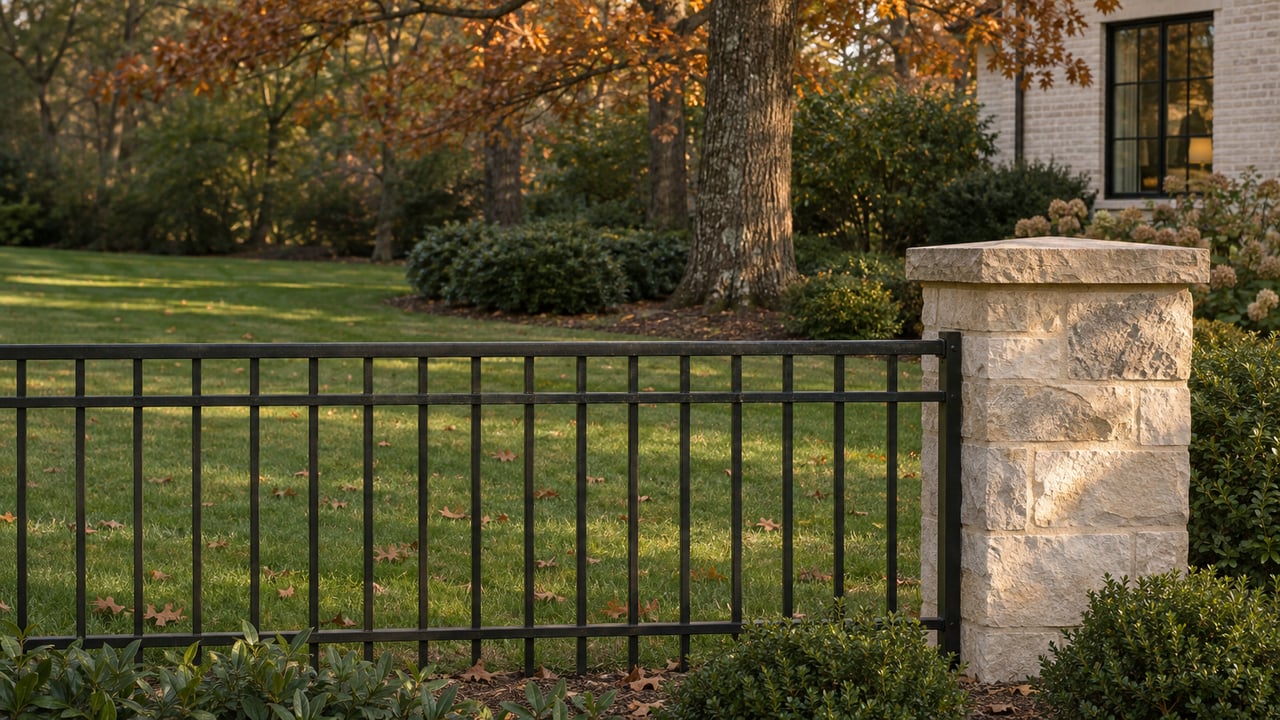
- Approved materials: wood, natural or cultured stone, brick, painted metal, wrought iron, and wood stained dark brown or painted white. Wire fencing can be attached to the inside face of a primary fence.
- Chain link: prohibited unless it is coated black, dark green or dark brown, stands four feet or lower, and can't be seen from the street or a neighboring house without written consent. The yard between it and adjacent lots also has to be landscaped to hide at least 90% of its height.
- Prohibited outright: above-ground electrified fences, exposed spike ends, barbed wire outside farm fencing, and fences on a shared driveway or easement.
- Allowed exceptions: pool fences the city's adopted residential code requires for safety, temporary six-foot fences on construction sites, and privacy enclosures right around HVAC units, pool equipment, garbage cans or generators.
- Historic stone walls: exempt from the section. The city states an intent to preserve them.
The finished side of any fence has to face the neighbors and the street, with posts and framing on the inside.
A fence on top of a retaining wall counts as one structure
Oak Hill's hills mean many lots already have retaining walls, so the height rules for walls matter as much as the fence rules. Height is measured from finished grade on the lower side. A fence built on a retaining wall, another wall or a berm counts as a single structure, and the combined height can't exceed what either would be allowed alone. Using a berm to make a fence taller is prohibited.
Retaining walls of any kind, terraced ones included, are capped at six feet. A wall over three feet needs engineered plans stamped by a professional engineer before a permit is issued, and the city may ask for geotechnical studies. Walls facing a neighbor have to be screened with evergreens that will cover at least 75% of the wall once they mature, and no wall can be built within ten feet of an easement. On a sloped lot, a buyer picturing a six-foot privacy fence along the top of an existing wall may find that the wall uses up most of the allowed height.
Permits, fees and the variance path
Every new fence needs a permit before construction starts. Oak Hill's permits page lists a site plan showing setbacks among the general requirements and says fees are calculated during permitting. The Codes Department documents page collects the fee schedule, zoning map, plan-review checklist and pool and fence requirements in one place. Residential permit fees on that schedule are based on the value of the job, starting at $100 for work valued from $1 to $1,000.
An owner who wants something the code doesn't allow can apply to the Board of Zoning Appeals for a variance. The city's variance process requires a hardship tied to the property itself. It starts with a pre-application meeting with the Codes Department, followed by a BZA application, public notice and a presentation by the applicant. The residential fee to present an appeal is $250.
How the vote went, and why it could be revisited
The ordinance took months. In June, the mayor's spring newsletter reported that the Board of Commissioners was still reviewing a revised draft. The Summer 2026 newsletter reported that the Planning Commission took it up in late May, followed by first reading at the board's July meeting, and that the board passed it 3–1. In that newsletter, the mayor called drafting the ordinance "to address the divergent opinions of many residents" challenging and added, "If it proves not to be meet for the purpose, it can always be amended at a future time."
The online municipal code on Municode lists Ordinance 2026-05 as adopted on August 19, 2026, but not yet codified. Until it is, the adopted ordinance is the text to read.
Before you write the offer
These questions apply to any Oak Hill property whose appeal depends partly on its yard:
- Which district is the lot in? Look it up on the zoning map or in Metro's Parcel Viewer.
- Is there a front fence? In Districts A through C, it can stay only in its current form.
- Was the existing fence built before August 19, 2026?
- Does your plan for a dog run, pool enclosure or privacy screen fit the rear-yard height, opacity and material rules?
- Does the lot have retaining walls whose height would count against a fence built on top?
Quick answers
Can I paint an inherited front fence a new color? Section (e) protects existing fences only when repairs and replacements don't change their color, design, height, width or location.
Can a solid privacy fence go along the back of my lot? In Districts A through C, a solid fence up to six feet is allowed in the rear yard. In D through F, it has to stay out of accessory-structure setbacks and no closer to the side lines than the house.
Does an old stone wall count? Historic stone walls are exempt from Section 14-123.
This post is general information about a city ordinance, not legal advice. Before you rely on it, confirm your property's situation with Oak Hill's Codes Department or a real estate attorney.
When a property's fence, walls and zoning district shape what it's worth to you, our team can collect those details before you make an offer. Request your personal Real Estate Concierge at CHORD Real Estate.